Guide
Kotor to Dubrovnik: All Transport Options
Kotor and Dubrovnik are 52 kilometres apart by road. On a map, it looks like a quick drive. In reality, there is an international border between Montenegro and Croatia — and during July and August, that border can add one to three hours to your journey. Every transport option between these two cities is shaped by the Karasovići / Debeli Brijeg crossing, the busiest land border in the Western Balkans. Choose the wrong time, and a one-hour drive becomes a four-hour ordeal.
This guide covers every realistic way to travel between Kotor and Dubrovnik in 2026 — buses, the seasonal catamaran ferry, rental cars, private transfers, and guided tours. Real prices, real schedules, and detailed border-crossing strategy including the new EU Entry/Exit System (EES) that went fully operational in April 2026.
For the full Montenegro destination guide, see our Montenegro travel guide. For costs and budgeting, see Montenegro Travel Cost Per Day 2026.
Quick Comparison
| Method | Cost | Travel Time | Border Wait | Best For |
|---|---|---|---|---|
| Bus | €13–50 | 2–3.5 hours | Included in journey time | Budget travellers, solo backpackers |
| Ferry (seasonal) | €50–75 | ~3 hours | At port, not road | Avoiding road border entirely |
| Rental car | €25–50/day + fuel | 1–4 hours | You wait in the queue | Flexibility, Bay of Kotor road trip |
| Private transfer | €100–230 per vehicle | 1.5–3 hours | Driver manages queue | Groups, families, tight schedules |
| Guided day tour | €40–80 per person | Full day (8–10 hrs) | Managed by guide | First-timers, no planning required |
The Border: Everything You Need to Know
Before choosing your transport, understand the border. Every option except the ferry puts you through the Karasovići / Debeli Brijeg crossing, and your experience depends almost entirely on when you cross it.
Karasovići / Debeli Brijeg
This is the only direct road crossing on the Kotor–Dubrovnik coastal route. It sits about 40 kilometres south of Dubrovnik. Two checkpoints operate 200 metres apart — Croatian exit (or entry), then Montenegrin entry (or exit). Both are staffed 24 hours.
| Season | Typical Wait Time | Worst Window |
|---|---|---|
| Off-season (October–April) | 5–15 minutes | No consistent bad window |
| Shoulder (May, June, September) | 15–30 minutes | 11:00–14:00 |
| Peak summer (July–August) | 1–3 hours | 10:00–14:00 daily |
| Peak summer worst case | 3–5 hours | Saturday midday, cruise ship days |
Why It Jams
Three traffic streams funnel through this single crossing: private vehicles travelling between Montenegro and Croatia, cruise-ship tour buses from Dubrovnik heading to Kotor (Dubrovnik receives up to 4,000 disembarking cruise passengers per day in peak season, many heading straight for Montenegro), and local Montenegrin commuters. Between 10:00 and 14:00 on a summer day, all three streams collide.
The EES Factor (New for 2026)
The EU Entry/Exit System (EES) went fully operational at all Schengen borders on April 10, 2026. Croatia is in the Schengen Area. Montenegro is not. This means the Karasovići crossing is a full Schengen external border.
What it means for you: if you are a non-EU citizen (US, UK, Canadian, Australian, etc.), your first entry into the Schengen Area records your fingerprints and facial image. This biometric registration takes 3 to 6 minutes per person. Subsequent crossings verify against the stored record and are faster — around 60 to 90 seconds. EU/EEA citizens are unaffected and use the separate lane.
Practical impact: the EES adds a small amount of per-person processing time, but the real bottleneck remains the queue of vehicles ahead of you, not the process itself. First-time EES registration might add 10 to 15 minutes for a group of four. After your first crossing, it is back to normal speed.
When to Cross
The single most important decision for your Kotor–Dubrovnik journey in summer is timing.
Before 8:00 AM: The golden window. Cruise buses do not start rolling out of Dubrovnik until around 8:30. Cross by 8:00 and you are through in 10 to 20 minutes, even in August.
After 16:00 (4:00 PM): The afternoon wave clears. By 16:00, cruise day-trippers are returning to Dubrovnik and the queue drops dramatically. A crossing that took two hours at noon takes 15 minutes at 17:00.
10:00 to 14:00: Avoid this window in July and August unless you have no choice. This is when every bus, tour group, and day-tripper hits the crossing simultaneously.
Night crossings: The fastest of all. A 22:00 crossing in August takes 3 to 5 minutes.
💡 Pro Tip
The 7 AM rule. If you have a morning departure from Kotor to Dubrovnik in summer, leave Kotor by 7:00. You reach the border by 7:30 to 7:45, clear it by 8:00 to 8:15, and arrive in Dubrovnik before 9:00. An hour of extra sleep is not worth three hours in a stationary queue.
Alternative Crossing: Vitaljina
A smaller crossing sits 15 kilometres south of Karasovići, on the Konavle plain. Cruise buses cannot use it. When Karasovići is jammed, Vitaljina's single-lane format can be faster because the volume is lower. This is a local-knowledge trick — most tourists do not know it exists. Drivers of private transfers route through it when conditions warrant.
Option 1: Bus
Multiple operators run Kotor–Dubrovnik buses daily. This is the cheapest option and requires zero planning beyond buying a ticket.
Operators and Schedules
The main operators are FlixBus, Jadran Ekspres Kotor, CroatiaBus (Globtour), Blue Line, and Božur. Combined, they offer 6 to 10 daily departures in summer, fewer in winter.
FlixBus runs 3 daily departures. First bus departs around 07:10, last around 18:00. Other operators fill in additional morning and afternoon slots. Jadran Ekspres runs twice daily.
Pricing
| Booking Method | Price Range |
|---|---|
| FlixBus (booked online, advance) | €35–55 |
| Jadran Ekspres / CroatiaBus (online via Omio or Busbud) | €13–35 |
| At the station, day of | €15–25 |
Prices vary by operator, demand, and how far ahead you book. FlixBus uses dynamic pricing — early booking is significantly cheaper. Local operators like Jadran Ekspres are cheaper overall but less polished.
Duration
2 hours 15 minutes to 3 hours 30 minutes depending on border wait time. The drive itself is about 1 hour 15 minutes. Buses queue at the border like private vehicles — in peak summer, this can add over an hour.
Stations
Kotor: Main bus station, approximately 10 minutes' walk from the Old Town Sea Gate.
Dubrovnik: Autobusni Kolodvor (main bus station), located at Gruž, about 3 kilometres from the Old Town. Local bus (lines 1a, 1b, 3, 8) or taxi to the Old Town takes 10 to 15 minutes.
Bus Tips
Book FlixBus in advance for the best prices — fares double close to departure in summer. For local operators, buying at the station is fine and often cheaper than online platforms that add booking fees.
Carry your passport in hand. The bus stops at the border. An officer boards, collects passports, processes them, and returns them. This can take 20 to 45 minutes in summer. Keep your passport accessible, not buried in luggage.
Take the earliest departure. The 07:10 FlixBus (or equivalent early morning) crosses the border before the crush. Midday buses can lose an hour or more at Karasovići.
Bring water and snacks. There is no guarantee of air conditioning quality, and border stops offer no amenities.
Option 2: Ferry (Seasonal)
The catamaran ferry bypasses the road border entirely, making it the most stress-free way to travel between Kotor and Dubrovnik in summer — and the most scenic.
Operator and Schedule
Kompas / Adriatic Lines operates the route using the high-speed catamaran Antonija. The service is seasonal: June to September only.
Kotor → Dubrovnik departures: typically at 17:30, with some schedule variations.
Dubrovnik → Kotor departures: typically at 09:30.
| Period | Frequency |
|---|---|
| Early June + September | 2 per week (Monday, Wednesday) |
| Late June to early September | 3 per week (Monday, Wednesday, Saturday) |
Pricing
| Passenger | One Way | Day Trip Return |
|---|---|---|
| Adult | €50–60 | €75 |
| Child (3–11) | €25–30 | €37.50 |
| Infant (0–2) | Free | Free |
No vehicle transport — this is a foot-passenger-only catamaran.
Duration
Approximately 3 hours. The catamaran sails through the Bay of Kotor and out across the open Adriatic to Dubrovnik's Gruž port. The Bay of Kotor section is spectacular — you see the entire fjord-like bay from the water.
Border Control
Passport checks happen at the ports before boarding and after arrival, not en route. This is faster and more orderly than the road crossing. Arrive at Kotor port at least 1 hour before departure for check-in and border processing.
Why Choose the Ferry
In July and August, the ferry turns a potentially 4-hour border-delayed bus or car journey into a comfortable 3-hour scenic crossing with zero road traffic. You board at Kotor's port — steps from the Old Town — and arrive at Dubrovnik's Gruž port near the main bus station. No Karasovići queue, no EES processing at a car window, no sitting in a hot vehicle.
Why It Does Not Always Work
The schedule is limited — 2 to 3 departures per week, and only June to September. The evening departure from Kotor (17:30) means losing an afternoon if you are leaving Kotor that day. A same-day return trip from Kotor to Dubrovnik is not possible by ferry — the departure and return times do not allow it. Pets are not allowed on board. And at €50 to €60 per person, it is significantly more expensive than the bus for solo travellers.
Book in advance. The catamaran sells out in peak season. Book via Ferryhopper, DirectFerries, or the Adriatic Lines website.
ℹ️ Good to Know
Day trips: A same-day round trip from Kotor to Dubrovnik by ferry is not possible — the outbound departs at 17:30 and the return leaves Dubrovnik at 09:30 the next morning. You need at least one night in Dubrovnik. For a Dubrovnik day trip from Kotor, use the bus or a private transfer instead.
Option 3: Rental Car
A rental car gives you complete flexibility and the chance to stop at Herceg Novi, Perast, and the Bay of Kotor viewpoints. The drive itself is one of the most scenic coastal roads in the Adriatic.
The Route
From Kotor, the route follows the bay shore north and west through Dobrota and past Perast, then exits the bay and heads northwest along the coast to the border at Debeli Brijeg. After the crossing, you continue along the Croatian coast through Cavtat and into Dubrovnik. The road is a two-lane coastal highway — well-paved, well-maintained, but not a motorway. Expect mountain views, sea views, and tight turns.
Distance: 52 kilometres. Drive time without border: approximately 1 hour. With border (off-peak): 1 hour 15 minutes. With border (peak summer midday): 2 to 4+ hours.
Worth-Stopping Spots
Perast — 12 kilometres from Kotor. The most beautiful village on the Bay of Kotor. Stone palaces, two offshore islands including Our Lady of the Rocks, boat taxis to the island (€5). Allow 1 to 2 hours.
Verige Strait — The narrowest point of the bay, about 20 kilometres from Kotor. Pull over for the best panoramic photograph of the fjord-like geography.
Herceg Novi — 10 minutes after the border on the Montenegrin side. A hilltop old town with a fortress and views over the bay entrance. Far less visited than Kotor. Worth 30 to 45 minutes.
Cavtat — 20 minutes from Dubrovnik on the Croatian side. A relaxed seaside town. Good for a coffee or lunch stop before the final stretch.
Car Rental and Cross-Border Rules
The critical detail: if you rent a car in Montenegro and want to drive to Croatia (or vice versa), confirm with the rental company that cross-border driving is covered. Most major agencies allow it but charge a cross-border fee (€20 to €50). Some budget agencies prohibit it entirely. Read the fine print.
Green Card insurance: required for vehicles entering Montenegro from Croatia. EU/EEA/UK/Swiss-registered vehicles are accepted on their registration plate alone (no separate Green Card needed under the Multilateral Agreement). For other vehicles, the Green Card must be arranged before you reach the border — it cannot be purchased at the crossing.
Parking in Kotor: the Old Town is car-free. Paid parking lots outside the walls cost €1 to €1.50 per hour. Arrive before 9:00 in summer or the closest spots fill.
Fuel: fill up in Montenegro — fuel is cheaper than in Croatia. Petrol stations are available in Kotor and along the bay road.
| Cost Item | Price |
|---|---|
| Rental car (compact, per day) | €25–50 |
| Cross-border fee | €0–50 |
| Fuel (Kotor–Dubrovnik, one way) | ~€5–8 |
| Kotor parking (per hour) | €1–1.50 |
| Dubrovnik parking (Old Town area, per hour) | €5–10 |
⚠️ Heads Up
Dubrovnik parking is expensive. Old Town–area parking costs €5 to €10 per hour in summer. Park at Gruž (near the port/bus station) for lower rates and take a bus or taxi to the Old Town. If you are only visiting Dubrovnik for a day, the bus or transfer may work out cheaper than driving when parking costs are factored in.
Option 4: Private Transfer
A private car with driver handles the border logistics, knows the queue patterns, and delivers you door-to-door. The most comfortable option and often the most time-efficient in peak summer.
Pricing
| Vehicle | Capacity | Price (one way) |
|---|---|---|
| Standard sedan | Up to 3 passengers | €100–150 |
| Minivan | Up to 6 passengers | €130–200 |
| Premium / large group | Up to 8 passengers | €180–230 |
Prices are per vehicle, not per person. A group of four in a standard sedan pays €25 to €38 per person — competitive with FlixBus fares and vastly more comfortable.
Why Transfers Win in Summer
Professional drivers who cross this border daily know the queue patterns. They use the 7:00 AM departure window, switch to Vitaljina when Karasovići jams, and have all vehicle paperwork pre-arranged. A private transfer in August can save you 1 to 2 hours compared with driving yourself or taking a midday bus.
How to Book
GetTransfer, KiwiTaxi, or Daytrip — online platforms with fixed pricing and advance booking. Compare all three for the best rate on your date.
Through your accommodation. Kotor hotels routinely arrange transfers. Ask at reception — rates are often lower than platforms because hotels work with trusted local drivers directly.
Easy Balkan Transfers — a specialist regional operator with English-speaking drivers covering the Dubrovnik–Kotor corridor daily.
Duration
1 hour 30 minutes to 2 hours off-peak. 2 to 3 hours in summer depending on border timing. Drivers coordinate departures to hit the early-morning or late-afternoon windows.
Option 5: Guided Day Tour
If you are based in Dubrovnik and want to visit Kotor (or vice versa) for the day without any logistics, a guided tour handles transport, border crossing, and itinerary.
What You Get
Most Dubrovnik–Kotor day tours include: pickup from your Dubrovnik accommodation, the drive along the bay, a stop at Perast and Our Lady of the Rocks, 2 to 3 hours of free time in Kotor Old Town, and return to Dubrovnik. Total duration: 8 to 10 hours. Some tours add Budva or Herceg Novi.
Pricing
€40 to €80 per person on group tours (minibus or bus). €150 to €300 per vehicle for private tours. Book via Viator, GetYourGuide, or local agencies in Dubrovnik.
The Trade-Off
Tours depart early (7:00 to 8:00 AM) to beat the border rush — which is smart. The downside is limited free time in Kotor (usually 2 to 3 hours) and a fixed schedule. If you want to explore Kotor at your own pace, take the bus or drive. If you want zero planning and an organised experience, the tour works well.
Route Comparison: Which Option When?
| Scenario | Best Option | Why |
|---|---|---|
| Solo budget traveller, summer | Bus (early morning) | Cheapest, border wait manageable at 7 AM |
| Couple, July–August | Ferry or private transfer | Ferry avoids border entirely; transfer manages it for you |
| Group of 3–4 | Private transfer | Per-person cost matches the bus; door-to-door service |
| Family with kids | Private transfer | No bus queues, comfortable vehicle, flexibility |
| Day trip from Dubrovnik | Guided tour or rental car | Tour handles everything; car allows custom stops |
| Off-season (Oct–April) | Bus or rental car | Border is a non-issue; 10-minute crossing |
| Night arrival | Private transfer | Border is empty; driver meets your ferry or flight |
Stops Between Kotor and Dubrovnik
The route passes through some of the most scenic territory in the Balkans. If you are driving or have a private transfer, these stops are worth adding:
Perast — The baroque jewel of the Bay of Kotor. Stone palaces, the Church of Our Lady of the Rocks on its tiny man-made island (€5 boat, €2 museum entry), and one of the most photographed bays in Europe. Allow 1 to 2 hours. Best in the morning before tour groups arrive.
Risan — Ancient Roman mosaics (2nd century AD) in a small museum. The bay's oldest settlement. €3 entry. 20 to 30 minutes.
Herceg Novi — Montenegro's overlooked coastal town. The old town sits on a hillside above the bay entrance, with a Venetian-era fortress and panoramic views. Skip it if you are short on time; include it if you want a Montenegrin town without the Kotor crowds. 30 to 60 minutes.
Cavtat — A laid-back Croatian seaside village 20 minutes south of Dubrovnik. Waterfront cafés, a tree-lined promenade, and a Račić Mausoleum by sculptor Ivan Meštrović. A peaceful contrast to Dubrovnik's intensity. 30 to 60 minutes.
Getting Around at Each End
Kotor
The Old Town is entirely walkable — 300 metres end to end. The bus station is a 10-minute walk from the Sea Gate. The ferry port is steps from the Old Town. Taxis are available at the bus station and port, but you are unlikely to need one unless your accommodation is outside the Old Town.
Dubrovnik
The bus station and ferry port are both at Gruž, approximately 3 kilometres from the Old Town. From Gruž to the Old Town: local bus (lines 1a, 1b, 3, 8, fare ~€2) takes 10 to 15 minutes, or taxi for approximately €10 to €15. Walking takes 35 to 40 minutes along the waterfront. If you arrive by bus or ferry, Gruž has cafés, ATMs, luggage storage, and car rental agencies.
Connectivity and Practical Notes
SIM / eSIM: You are crossing between two countries and two mobile networks. An eSIM with multi-country coverage (Airalo Balkans package, from €4.50) avoids roaming charges on both sides. See our best eSIM for the Balkans comparison.
Currency: Montenegro uses the euro. Croatia uses the euro (since January 2023). No currency change needed — one of the few Balkan border crossings where this is the case.
Languages: Montenegrin in Kotor, Croatian in Dubrovnik. English is widely spoken in both tourist centres.
Luggage storage: Available at both bus stations. In Kotor, lockers and a left-luggage office are at the bus station. In Dubrovnik, similar services at the Gruž bus station plus commercial luggage storage near the Old Town.
Frequently Asked Questions
What is the fastest way from Kotor to Dubrovnik? By rental car or private transfer departing before 8:00 AM — approximately 1 hour 15 minutes door-to-door. The ferry takes 3 hours but avoids the road border entirely, making it the most predictable option in summer.
How much does the bus from Kotor to Dubrovnik cost? €13 to €55 depending on operator and when you book. Local operators (Jadran Ekspres, CroatiaBus) are cheapest at €13 to €25. FlixBus charges €35 to €55 with dynamic pricing — book early for the lower end.
How long is the border wait in summer? At Karasovići / Debeli Brijeg: 1 to 3 hours between 10:00 and 14:00 in July and August. Before 8:00 AM or after 16:00, it drops to 10 to 20 minutes. Night crossings take under 5 minutes.
Is there a ferry from Kotor to Dubrovnik? Yes — Kompas / Adriatic Lines runs a high-speed catamaran 2 to 3 times per week from June to September. Approximately 3 hours, €50 to €60 per adult one way. Foot passengers only, no vehicles.
Can I do a day trip from Kotor to Dubrovnik? Yes, by bus, rental car, or private transfer. Not by ferry — the schedule does not allow a same-day return. Leave early (before 8:00) to maximise time in Dubrovnik and beat the border.
Do I need a passport? Yes. You are crossing between Montenegro (non-EU, non-Schengen) and Croatia (EU, Schengen). A valid passport is required for all nationalities. EU/EEA citizens can also use a national identity card.
What is the EES and does it affect me? The EU Entry/Exit System records biometric data (fingerprints, facial scan) for non-EU citizens entering the Schengen Area. It has been fully operational since April 2026. First-time registration takes 3 to 6 minutes per person. After that, subsequent crossings are faster. EU/EEA citizens are not affected.
Can I take a rental car across the border? Only if your rental contract explicitly permits it. Most major agencies allow Croatia–Montenegro cross-border driving but charge a fee (€20 to €50). Some budget agencies prohibit it. Confirm before pickup. EU/EEA-registered rental cars do not need a separate Green Card for Montenegro.
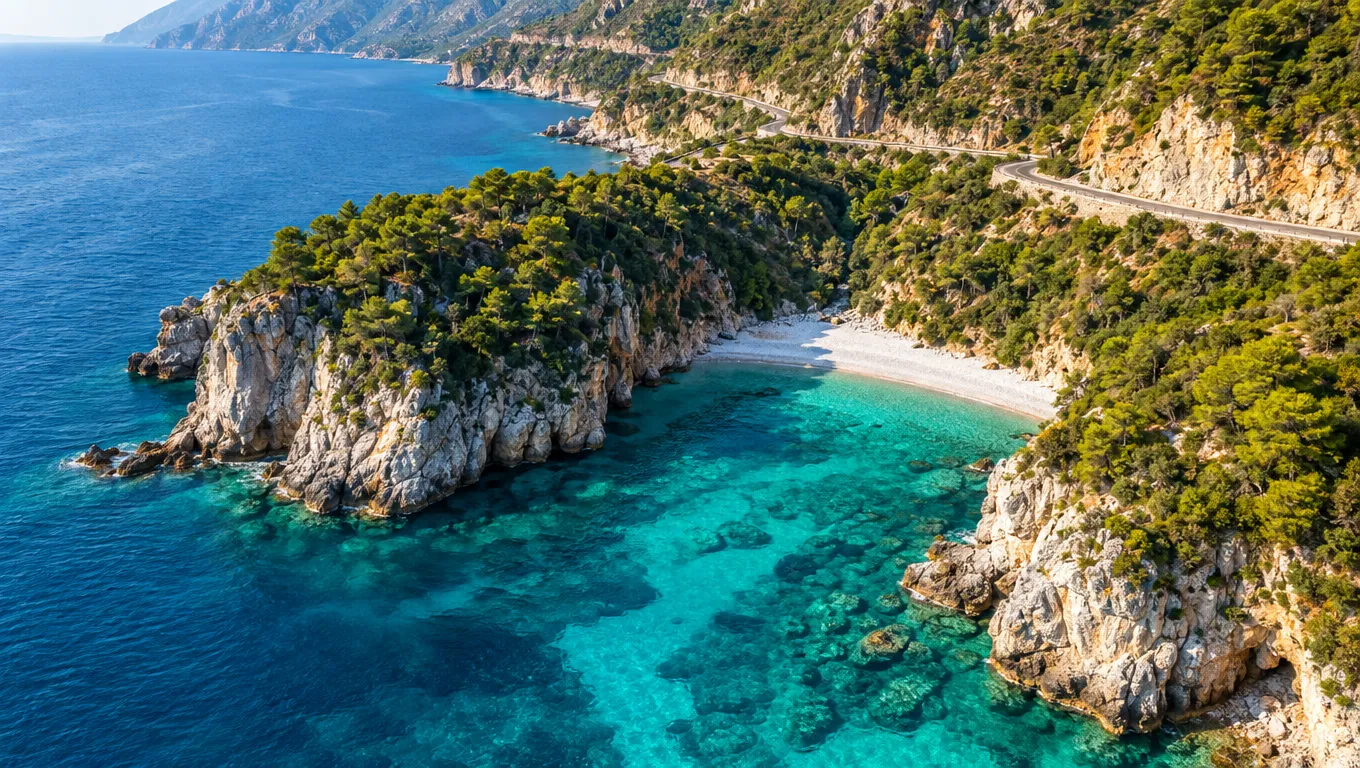
Is the Kotor to Dubrovnik drive scenic? Exceptionally so. The road follows the Bay of Kotor's fjord-like shore, passes through Perast and Herceg Novi, and runs along the Croatian coastline with the Adriatic on one side and limestone mountains on the other. It is one of the best short drives in Europe.
The Kotor–Dubrovnik journey is short in distance but shaped entirely by the border. In off-season, it is a one-hour scenic drive with a 5-minute stop at Karasovići. In peak summer, the same route can take four hours if you time it wrong. The solution is simple: leave early, leave late, or take the ferry. Get the timing right and the journey itself — the Bay of Kotor from the water, the coastal road through Herceg Novi, the first glimpse of Dubrovnik's walls — becomes one of the highlights of a Balkans trip.
For the complete Montenegro guide, see our Montenegro travel guide. For Bay of Kotor planning, read Bay of Kotor Day Trip: Complete Guide.