📋 Quick Facts
| Detail | Info |
|---|---|
| Currency | Euro (€). Cards accepted almost everywhere, including most islands. |
| Language | Greek. English very widely spoken in tourist areas and by younger locals. |
| Visa | US/UK/Canada/Australia: 90 days visa-free (Schengen 90/180 rule). EU citizens: free movement. ETIAS not yet live. |
| Power Plug | Type C and F (two round pins, 230V). US and UK travellers need an adapter. |
| Tap Water | Safe in Athens and most mainland cities. Variable on islands — check locally; many islands have desalinated water that is safe but tastes poor. Bottled water is cheap (€0.50–0.90). |
| Emergency | 112 |
| SIM / eSIM | Cosmote or Vodafone prepaid SIM from ~€10. eSIM via Airalo from €4.50. EU residents roam free. |
| Best Months | May–June and September–October — warm sea, thinner crowds, lower prices. |
Overview
Greece is the country that invented the idea of a Mediterranean holiday and then spent three thousand years perfecting it. The Parthenon still crowns Athens. Whitewashed villages still tumble down volcanic cliffs into impossibly blue water. Fishermen still haul octopus onto sun-bleached harbours. And the food — fresh feta, thick yoghurt drizzled with wild honey, grilled fish pulled from the Aegean that morning — is as good as everyone says it is.
The numbers are staggering: over 6,000 islands and islets (roughly 230 inhabited), 13,676 kilometres of coastline, and 18 UNESCO World Heritage Sites. Greece stretches from the alpine forests of Epirus in the northwest down through the Peloponnese and out across the Aegean to islands that sit closer to Turkey than to Athens. It is simultaneously one of the oldest civilisations in the world and a modern EU member state with good infrastructure, fast ferries, and an airport on seemingly every other island.
For travellers in the Balkans, Greece is often either the starting point or the grand finale. It shares a northern border with Albania, North Macedonia, and Bulgaria, and its northwestern regions — Epirus, the Ionian Islands, Corfu — are culturally and geographically part of the Balkan world. The ferry from Corfu to Saranda (Albania) takes 30 minutes. You can drive from Thessaloniki to Skopje in three hours.
The catch is price. Greece is mid-range for Europe overall, but the parts tourists spend money on — hotels, restaurants, ferries, attraction tickets — are priced close to the EU average. The famous islands (Santorini, Mykonos) can cost two to three times more than the mainland. Timing is the single biggest lever: the same hotel room in September costs 30 to 50 percent less than in August, with better weather and fewer crowds.
💡 Pro Tip
Greece is a Schengen country. Time spent here counts toward your 90-day Schengen limit alongside Italy, Croatia, France, Spain, and 25 other member states. If you are combining Greece with other Schengen countries, track your total days carefully. Need a Schengen break? Cross into Albania, North Macedonia, or Turkey — all non-Schengen.
Best Time to Visit
Greece is a warm-season destination. Most island tourism infrastructure shuts down or scales back dramatically from November through March.
May–June and September–October are the sweet spot. The Aegean reaches 21–24°C (comfortably swimmable), daytime air temperatures sit at 24–30°C, and the crushing July–August crowds have not arrived or have already left. Accommodation prices drop 20 to 40 percent from peak. September is arguably the best single month: the sea is at its warmest (24–25°C), the light turns golden, and the meltemi wind that batters the Cyclades in August has calmed.
July and August are peak season. The sea is warmest (24–26°C), days are long and intensely hot (32–38°C), and every major destination is packed. Ferries sell out, beach clubs charge premium rates for sunbeds, and Santorini's caldera-view hotels can exceed €500 per night. The meltemi — a strong northerly wind — blows through the Cyclades and can disrupt ferry schedules and make beaches on northern exposures rough. If you visit in peak season, book ferries and accommodation weeks in advance, and consider less-famous islands (Naxos, Milos, Karpathos) over the headline names.
April and early November are the edges. Great for Athens, the Peloponnese, Crete, and mainland sightseeing. Too cool for casual swimming on most islands in April (17°C sea temperature) but pleasant for hiking and ruins. Many island hotels and restaurants close by late October or early November.
December through March is winter. Athens, Thessaloniki, and Crete remain open and can be rewarding — archaeological sites are empty, prices are lowest, and the food is just as good. The islands are largely shut. Mountain areas (Metsovo, Arachova) have modest ski resorts and a cosy, domestic-tourism feel.
| Month | Sea °C | Air °C | Crowds | Prices |
|---|---|---|---|---|
| Apr | 17 | 18–22 | Very low | Budget |
| May | 19 | 22–27 | Low | Budget–Mid |
| Jun | 22 | 26–32 | Moderate | Mid |
| Jul | 24 | 28–35 | High | Peak |
| Aug | 26 | 28–38 | Very high | Peak |
| Sep | 25 | 25–31 | Moderate | Mid |
| Oct | 22 | 20–25 | Low | Budget–Mid |
How to Get There
Flying In
Athens International Airport (ATH) is the main gateway. Direct flights connect from virtually every European capital, plus seasonal and year-round routes from the US East Coast (Newark, JFK, Philadelphia, Boston, Chicago, Atlanta — mostly seasonal). Turkish Airlines connects through Istanbul from anywhere in the world. Budget carriers Ryanair, easyJet, Wizz Air, and Transavia serve Athens and several island airports directly from across Europe.
Thessaloniki (SKG) is the northern gateway — useful if you are arriving from or continuing to the Balkans. Direct flights from most European hubs.
Island airports with direct international flights include Santorini, Mykonos, Corfu, Crete (Heraklion and Chania), Rhodes, Kos, Zakynthos, Kefalonia, and Skiathos. In summer, charter and budget carriers fly directly from the UK, Germany, and Scandinavia to these islands, bypassing Athens entirely.
From the US, round-trip fares to Athens range from $650 to $950 from the East Coast and $750 to $1,100 from the West Coast. From the UK, budget fares start at £50 to £150 return.
Overland from the Balkans
Greece connects seamlessly to its Balkan neighbours by road:
| Route | Transport | Cost | Duration | Notes |
|---|---|---|---|---|
| Tirana → Athens | Bus | €30–40 | 10–12 hrs | Long ride. Consider flying. |
| Saranda → Corfu | Ferry | €10–15 | 30–40 min | Quick hop across the strait. Passport required. |
| Thessaloniki → Skopje | Bus | €15–20 | 3.5 hrs | Frequent service. |
| Thessaloniki → Sofia | Bus | €15–25 | 3.5–4 hrs | Several daily departures. |
| Thessaloniki → Istanbul | Bus | €25–35 | 8–10 hrs | Overnight services available. |
💡 Pro Tip
Balkan combo tip: Fly into Athens, island-hop south, then ferry from Corfu to Saranda (Albania) and continue north through the Balkans by bus. Or reverse the route — start in the Balkans and finish with the Greek islands. The Corfu–Saranda ferry makes this seamless.
Where to Stay
Accommodation is typically the largest expense in Greece, and the island price premium is real: Santorini and Mykonos can cost two to three times more than Athens for equivalent quality.
Climate Resilience Fee: Since 2024, Greece charges a nightly fee on all accommodation, replacing the old tourist tax. Rates vary by property rating and season: €1.50 per night for a 3-star hotel in low season, up to €10 per night for a 5-star in peak season. Short-term rentals (Airbnb) are typically €2 to €8 per night. This fee is usually paid at check-out — budget for it.
Athens
The capital offers excellent value compared to the islands. The Plaka and Monastiraki neighbourhoods are the most atmospheric bases — walkable to the Acropolis, packed with tavernas. Budget hotels and guesthouses run €50 to €80 per night. Mid-range boutique hotels with Acropolis views: €90 to €150. Hostels: €15 to €25 per dorm bed. The Koukaki neighbourhood (south of the Acropolis) offers slightly lower prices with easy metro access.
Santorini
The most expensive destination in Greece. Caldera-view hotels in Oia or Fira start at €200 and climb past €500 in peak season. Budget travellers should stay in Perissa, Kamari, or Emporio — away from the caldera but close to beaches, with rooms from €60 to €120. Hostels exist but are pricey: €25 to €50 per dorm bed in summer.
Mykonos
Similar pricing to Santorini. Peak-season hotels start at €150 to €250. Budget travellers should base in Ornos or Tourlos rather than Mykonos Town. Expect €100 to €170 for a decent mid-range double.
Crete
Greece's largest island and one of its best values. Chania's old Venetian harbour is stunning, with boutique hotels from €70 to €130 and guesthouses from €40 to €70. Heraklion is more urban and cheaper. The south coast (Paleochora, Loutro) is quieter and very affordable: €30 to €60 per night.
Corfu and the Ionian Islands
Corfu Town has a Venetian character and good-value accommodation: €50 to €90 for a mid-range double. Kefalonia, Lefkada, and Zakynthos are slightly cheaper. The Ionians are greener and less wind-battered than the Cyclades — excellent for families.
The Cyclades (Beyond Santorini and Mykonos)
Naxos, Paros, Milos, and Sifnos offer the classic Cycladic experience at 30 to 50 percent less than Santorini. Mid-range doubles run €70 to €130 in summer. These islands are increasingly popular — book early for July and August.
Thessaloniki
Greece's second city is affordable, with a vibrant food scene and nightlife. Hotels run €50 to €100 for mid-range. Excellent base for day trips to Mount Olympus, Vergina, and the Halkidiki beaches.
ℹ️ Good to Know
Booking tip: For the best island deals, book 2 to 3 months ahead for July–August. For shoulder months (May–June, September–October), 3 to 4 weeks is usually enough. Many small island properties are not on Booking.com — check Google Maps and local booking sites directly.
Things to Do
Athens
The Acropolis — No introduction needed. The Parthenon, the Erechtheion, and the Temple of Athena Nike sit atop a limestone plateau above the city. The combo ticket (€35) covers the Acropolis and six other archaeological sites and is valid for five days — far better value than buying tickets individually. Visit at opening (8am) or late afternoon to avoid the worst heat and crowds.
The Acropolis Museum — One of the best museums in Europe. Beautifully designed, with direct sightlines to the Parthenon above. Separate ticket (€15).
Plaka and Monastiraki — The old town below the Acropolis. Wander the neoclassical streets, browse the Monastiraki flea market, eat souvlaki, and drink coffee in a rooftop bar with Acropolis views.
National Archaeological Museum — The largest archaeological museum in Greece. Mycenaean gold, Cycladic figurines, bronze statues. €12.
Meteora (day trip from Athens) — Six monasteries perched on top of towering rock pillars in central Greece. Reachable by train to Kalambaka (4.5 hours) — better as an overnight trip. One of the most dramatic landscapes in Europe.
The Cyclades
Santorini — The caldera, the sunsets, the blue domes. Walk from Fira to Oia along the caldera rim (3 hours, stunning). Visit the Red Beach and Akrotiri (a Minoan archaeological site buried by volcanic eruption — the "Pompeii of the Aegean," €12). Take a boat tour to the volcanic hot springs (€25–30).
Mykonos — Windmills, Little Venice, and Greece's most famous nightlife. The beaches at Paradise and Super Paradise are party hubs. The town is photogenic but expensive — eat and drink away from the waterfront to save.
Naxos — The largest Cycladic island. Long sandy beaches (rare in the Cyclades), a Venetian castle town, mountain villages, and excellent local cheese and potatoes. Far better value than Santorini or Mykonos.
Milos — Volcanic coastline with over 70 beaches, including the lunar-landscape Sarakiniko (white volcanic rock sculpted by wind and waves). Increasingly popular but still less crowded than the headline islands.
Paros — The gateway island for Cyclades hopping. Charming Naoussa harbour, windsurfing at Golden Beach, and easy ferry connections to Naxos, Mykonos, and Santorini.
Crete
Greece's largest island deserves a trip of its own. Samaria Gorge — a 16-km hike through Europe's longest gorge (open May to October, €5). Knossos — the Minoan palace and supposed labyrinth of the Minotaur (€15). Elafonisi Beach — pink-tinged sand and turquoise lagoons on the southwest coast. Chania's old town — Venetian harbour, Ottoman mosques, and the best food scene in Crete.
The Ionian Islands
Corfu — Venetian old town (UNESCO), lush green interior, and the gateway ferry to Albania. Less arid than the Cyclades — a different, greener Greece.
Zakynthos — Home to Navagio (Shipwreck) Beach, one of the most photographed spots in the world. Best seen from the clifftop viewpoint or by boat tour (€30–45). The island also has sea turtle nesting beaches on the south coast.
Kefalonia — Dramatic coastline, the Melissani cave lake, and Myrtos Beach. Quieter and more authentic than the more popular islands.
The Peloponnese
Often overlooked by island-bound travellers, the Peloponnese is packed with ancient sites: Olympia (birthplace of the Olympic Games), Mycenae (Lion Gate, Agamemnon's tomb), Epidaurus (an ancient theatre with perfect acoustics — still used for summer performances), and Nafplio (a beautiful Venetian port town, ideal base for the region).
Thessaloniki and the North
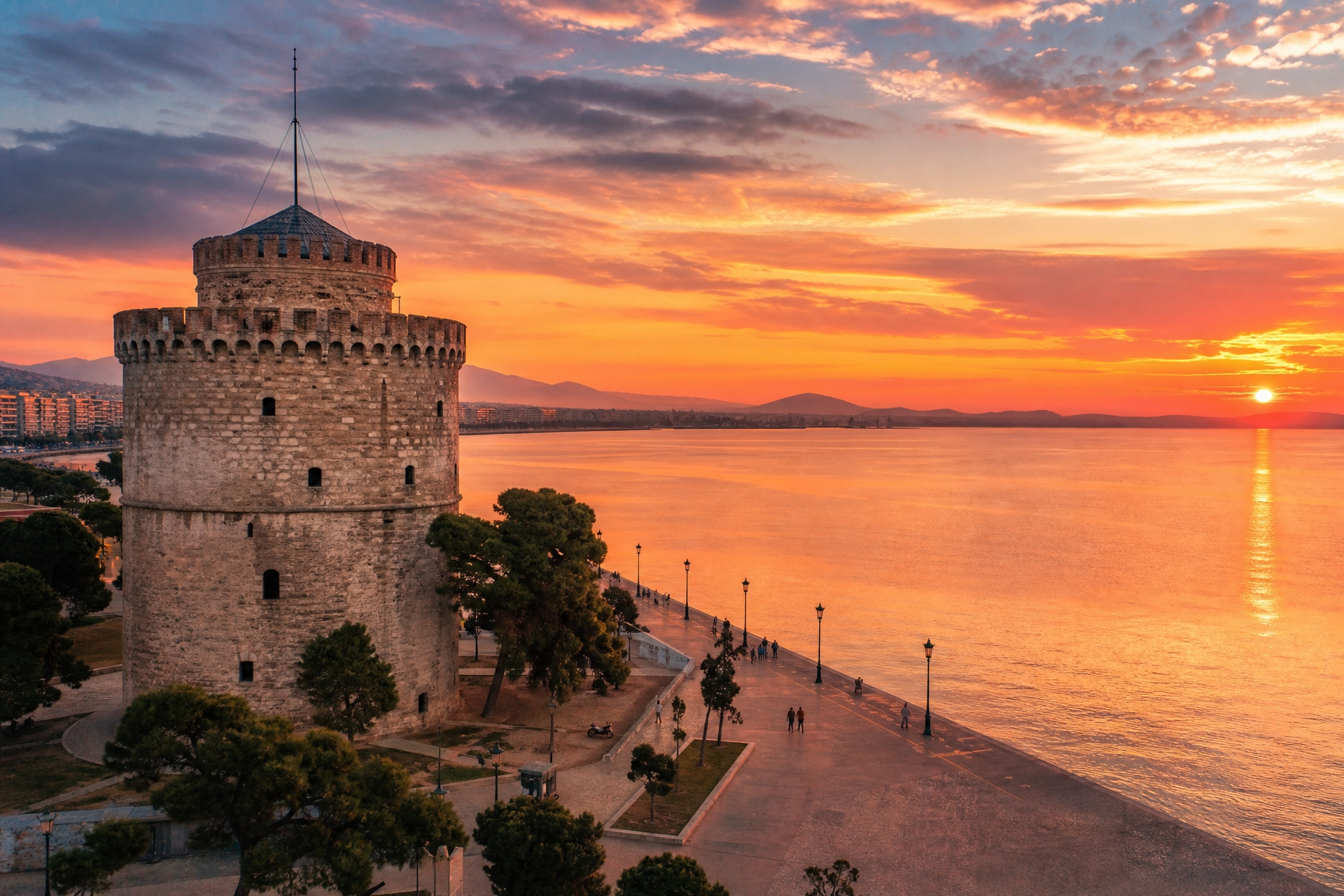
Greece's second city has the best food scene in the country (arguably better than Athens). Walk the White Tower, explore the Ano Poli (upper town) with Ottoman and Byzantine architecture, eat bougatsa (custard pie) for breakfast, and bar-hop on Valaoritou Street. Day trip to Mount Olympus (the highest peak in Greece, 2,917m — hikeable in summer) or the royal tombs at Vergina.
Costs and Budget
Greece uses the euro (€). Cards are accepted almost everywhere — even many island tavernas now take cards. Cash is still useful for small purchases, taxis, and beach vendors. ATMs are widely available on the mainland and all inhabited islands.
Greece sits in the mid-range of European pricing. Mainland cities (Athens, Thessaloniki) are reasonably affordable. The famous islands push daily costs significantly higher. The single biggest factor in your budget is not where you go, but when — shoulder-season pricing saves 25 to 50 percent on accommodation.
Daily Budget Ranges
| Travel Style | Daily Cost (per person) | Includes |
|---|---|---|
| Budget | €50–75 | Hostel or budget guesthouse, street food and taverna lunches, slow ferries, free beaches |
| Mid-range | €100–160 | Mid-range hotel or apartment, taverna meals and wine, fast ferries, some tours |
| Comfort | €200+ | Boutique hotel, restaurant dinners, private tours, beach clubs |
On Santorini and Mykonos, add 50–100% to these ranges.
Typical Prices (2026)
| Item | Cost |
|---|---|
| Souvlaki / gyros (street) | €3.50–5 |
| Greek salad (taverna) | €6–9 |
| Taverna main course | €10–18 |
| Mid-range restaurant dinner | €18–30 |
| Seafood dinner (upscale) | €25–40 |
| Espresso / cappuccino | €1.50–3.50 |
| Freddo cappuccino (iced) | €3–4.50 |
| Draught beer (0.5L) | €3.50–5.50 |
| Bottle of house wine (restaurant) | €10–20 |
| Hostel dorm bed | €15–35/night |
| Budget hotel (double, mainland) | €50–90/night |
| Mid-range hotel (double, islands) | €90–180/night |
| Boutique caldera hotel (Santorini) | €200–500+/night |
| Athens metro ticket (90 min) | €1.40 |
| Athens 24-hour transport pass | €4.50 |
| Ferry: Athens–Santorini (economy) | €48–65 |
| Ferry: Athens–Mykonos | €36–55 |
| Ferry: Athens–Crete (Chania) | €40–55 |
| High-speed catamaran supplement | +30–50% vs slow ferry |
| Car rental (per day) | €35–60 |
| Acropolis combo ticket | €35 |
| Beach club sunbed pair (Mykonos) | €30–60 |
| Climate Resilience Fee | €1.50–10/night |
💡 Pro Tip
The biggest money savers: Travel in May–June or September–October instead of July–August (accommodation drops 25–50%). Choose Naxos, Paros, or Milos over Santorini or Mykonos (30–50% cheaper). Use slow ferries (Blue Star) instead of high-speed catamarans (30–50% cheaper). Eat at tavernas, not waterfront restaurants. And buy the Athens combo ticket (€35 for 7 sites vs €20+ per individual site).
Essential Tips
Money
Greece uses the euro. Cards (Visa, Mastercard) are accepted at the vast majority of businesses, even on islands. Contactless payment is widespread. A travel debit card with no foreign transaction fees (Wise, Revolut) is the best option. ATMs are everywhere on the mainland and on all inhabited islands. Tipping is appreciated but not obligatory — leave 5 to 10 percent at sit-down restaurants if service was good; rounding up is fine at casual spots.
Language
Greek is the official language. English is very widely spoken in Athens, on the islands, and in tourist areas — Greece has one of the highest English-proficiency rates in southern Europe. In remote mainland villages and among older locals, English may be limited. A few useful phrases: Efcharistó (thank you), Kalimera (good morning), Parakaló (please/you're welcome), Yia sas (hello, formal), Yia sou (hello, informal).
Safety
Greece is very safe. The US State Department rates it "Exercise Normal Precautions." Violent crime against tourists is extremely rare. Pickpocketing is the main risk, concentrated in Athens (Monastiraki, Omonia Square, metro, Piraeus port) and on crowded ferries. Keep valuables in a front pocket or crossbody bag in busy areas.
Common tourist scams include overcharging at restaurants (always check the menu price), fake "friendship bracelet" sellers in Athens who demand payment, and unlicensed taxis at airports (use the official taxi rank or pre-book).
Swimming safety: some beaches have strong currents, and rocky coastlines can cause cuts. Jellyfish are occasional visitors in late summer.
Connectivity
EU residents roam free on their home mobile plans. For non-EU visitors, Cosmote (the largest network) offers prepaid SIMs from approximately €10 with data. Available at phone shops and some kiosks. Alternatively, set up an eSIM from Airalo or Saily before arrival. Wi-Fi is available in virtually all hotels, cafes, and restaurants — coverage is generally good even on islands. For full details, see our Best eSIM for the Balkans guide.
Food to Try
Greek cuisine is deceptively simple — few ingredients, maximum flavour, all built on olive oil, fresh vegetables, herbs, and the Mediterranean diet.
Souvlaki and gyros — Grilled meat (pork or chicken) on a skewer (souvlaki) or carved from a vertical rotisserie (gyros), wrapped in warm pita with tomato, onion, tzatziki, and chips. The best fast food in the Mediterranean. €3.50 to €5 from street vendors.
Moussaka — Layered aubergine, minced meat, potatoes, and béchamel, baked golden. The Greek lasagne. Rich, hearty, and a taverna staple.
Horiatiki (Greek salad) — Tomato, cucumber, onion, green pepper, olives, and a thick slab of feta drizzled with olive oil and oregano. No lettuce. Served with every meal, and somehow tastes completely different in Greece than anywhere else.
Spanakopita — Flaky filo pastry stuffed with spinach and feta. The perfect breakfast or snack. €2 to €3 from bakeries.
Grilled octopus — Charred, tender, drizzled with lemon and olive oil. Order it at any harbour-side taverna with a glass of ouzo.
Pastitsio — Baked pasta with minced meat and béchamel. The other Greek comfort food classic alongside moussaka.
Loukoumades — Small fried dough balls drenched in honey and cinnamon. Street-food dessert perfection.
Freddo cappuccino — Greece's contribution to global coffee culture. Iced, frothy, and essential in summer. Greeks take their coffee extremely seriously — do not rush it.
Wine and spirits: Greek wines are excellent and underrated. Look for Assyrtiko (crisp white from Santorini), Xinomavro (bold red from Naoussa), and Moschofilero (aromatic rosé from the Peloponnese). Ouzo (anise-flavoured spirit, served with ice and water) and tsipouro (grape marc spirit) are the traditional aperitifs. Retsina (pine-resin wine) is an acquired taste but worth trying once.
Getting Around Within Greece
Ferries are the backbone of island travel. Blue Star Ferries and Anek Lines run large, conventional ferries (slower, cheaper). SeaJets, Golden Star, and Hellenic Seaways operate high-speed catamarans (faster, 30–50% more expensive, more affected by rough seas). Book through FerryHopper or DirectFerries for price comparison. Book 2 to 4 weeks ahead for peak season — popular routes sell out.
KTEL buses cover the mainland efficiently but the system is fragmented: each regional prefecture has its own bus company and website. Buses between Athens and major mainland destinations (Delphi, Meteora, Nafplio, Thessaloniki) run frequently and are cheap (€10–25).
Trains are limited. The Athens–Thessaloniki corridor is the main useful route (€35–53, 4.5 hours). Beyond that, the rail network is sparse.
Domestic flights are useful for reaching distant islands quickly. Aegean Airlines and Sky Express connect Athens to most islands with airports. Shoulder-season fares start at €40 to €80 one way. Compare with ferry prices — flying is often only marginally more expensive and saves half a day.
Rental cars are valuable on large islands (Crete, Rhodes, Corfu, Naxos) and for the Peloponnese. Mainland driving is fine; island roads can be narrow and winding. Scooter rental is popular on islands (€15–25/day) but be aware: riding without a motorcycle licence means your travel insurance will not cover accidents.
Taxis are metered in cities. Athens airport to the centre is a flat fare of approximately €40. Uber does not operate in Greece; Beat (owned by FreeNow) is the local ride-hailing app and works in Athens and Thessaloniki.
Packing Essentials
Bring sunscreen (SPF 50 — the Greek sun is brutal), a hat, and sunglasses. A dry bag for ferry rides, boat tours, and beach days with valuables. Water shoes for rocky beaches and boat entry points. A light windbreaker if visiting the Cyclades (the meltemi wind can be strong even in summer). An EU power adapter (Type C/F) if coming from the US, UK, or Australia. And comfortable walking shoes — Athens, Santorini, and most old towns involve cobblestones, steps, and hills.
ℹ️ Good to Know
Schengen note: Greece is part of the Schengen Area. US, UK, Canadian, and Australian citizens get 90 days visa-free within any 180-day period across all Schengen countries combined. If you are also visiting Croatia, Italy, France, or Spain on the same trip, your days stack together. ETIAS (pre-travel authorisation for visa-exempt travellers) has been repeatedly delayed and is not yet live as of September 2026 — monitor the official ETIAS website before booking. Neighbouring Albania, North Macedonia, and Turkey are non-Schengen, so time spent there does not count against your 90 days.
Greece is the kind of place that makes you understand why humans invented the word paradise. The water is unreasonably blue, the food is unreasonably good, and the ruins remind you that people have been coming here and falling in love with it for three thousand years. You do not need to visit the most expensive islands to have the best experience — some of the finest moments will be at a nameless taverna on a quiet island, eating grilled fish with your feet in the sand, watching the Aegean turn gold at sunset.
For connectivity across the region, see Best eSIM for the Balkans. For travel insurance covering the Schengen zone, see Best Travel Insurance for the Balkans.
More Greece Guides
Guide
How Much Does Albania Really Cost?
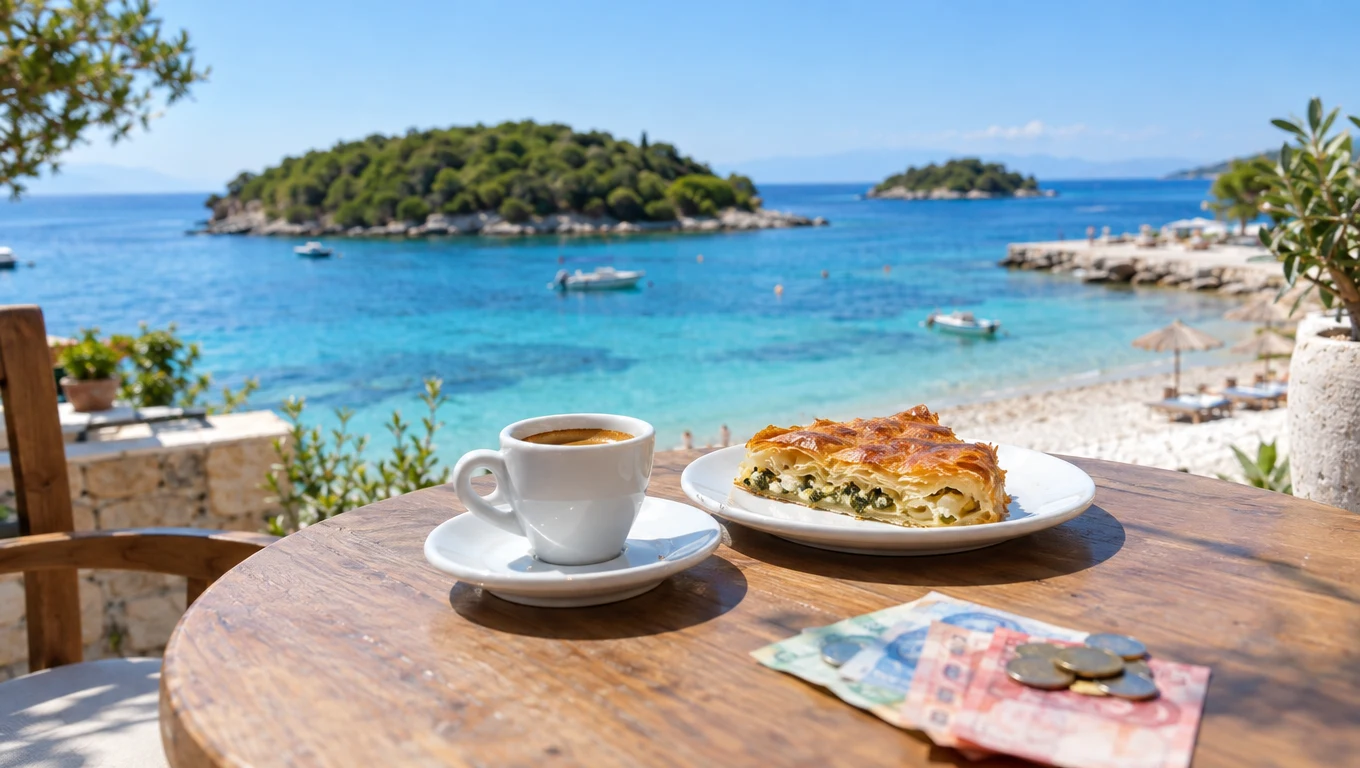
Real 2026 prices for Albania: accommodation, food, transport, beaches and activities, plus sample budgets for one week on the Riviera and inland.
Guide
Albanian Riviera on a Budget: Daily Costs 2026
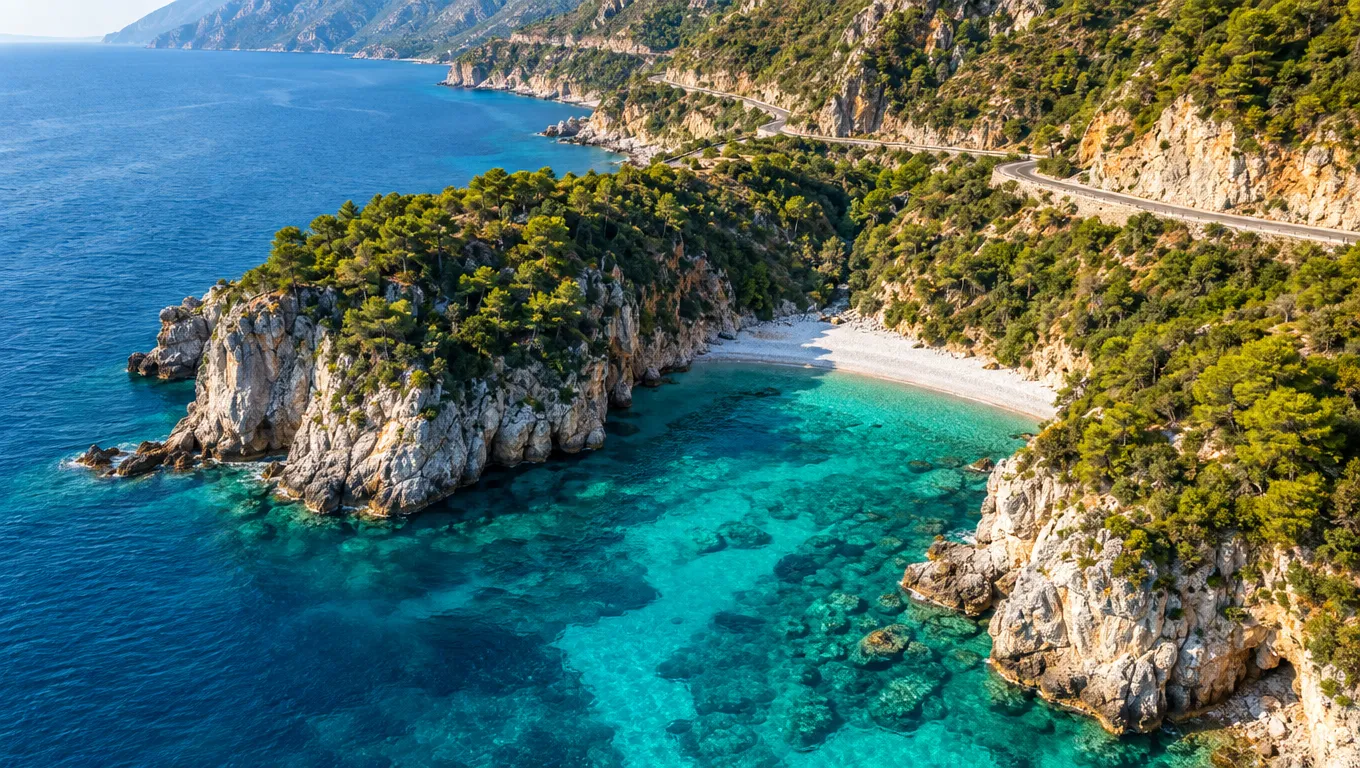
A line-by-line breakdown of what the Albanian Riviera actually costs in 2026 — accommodation, food, beaches, transport, and activities at every budget level. Real prices from Himara to Ksamil, with tested strategies to keep your daily spend under €50.
Guide
Albanian Riviera: The Complete 2026 Guide
Everything you need to plan your Albanian Riviera trip in 2026. Beaches, towns, costs, transport, safety, and where to stay — honest, updated, and based on real travel data.
Guide
Best Beaches on the Albanian Riviera (Ranked)
Every beach on the Albanian Riviera ranked for 2026 — from the wild canyon of Gjipe to the turquoise islands of Ksamil. Honest reviews with sunbed prices, access details, crowd levels, and which beaches are actually worth the hype.