Guide
Best Beaches on the Albanian Riviera (Ranked)
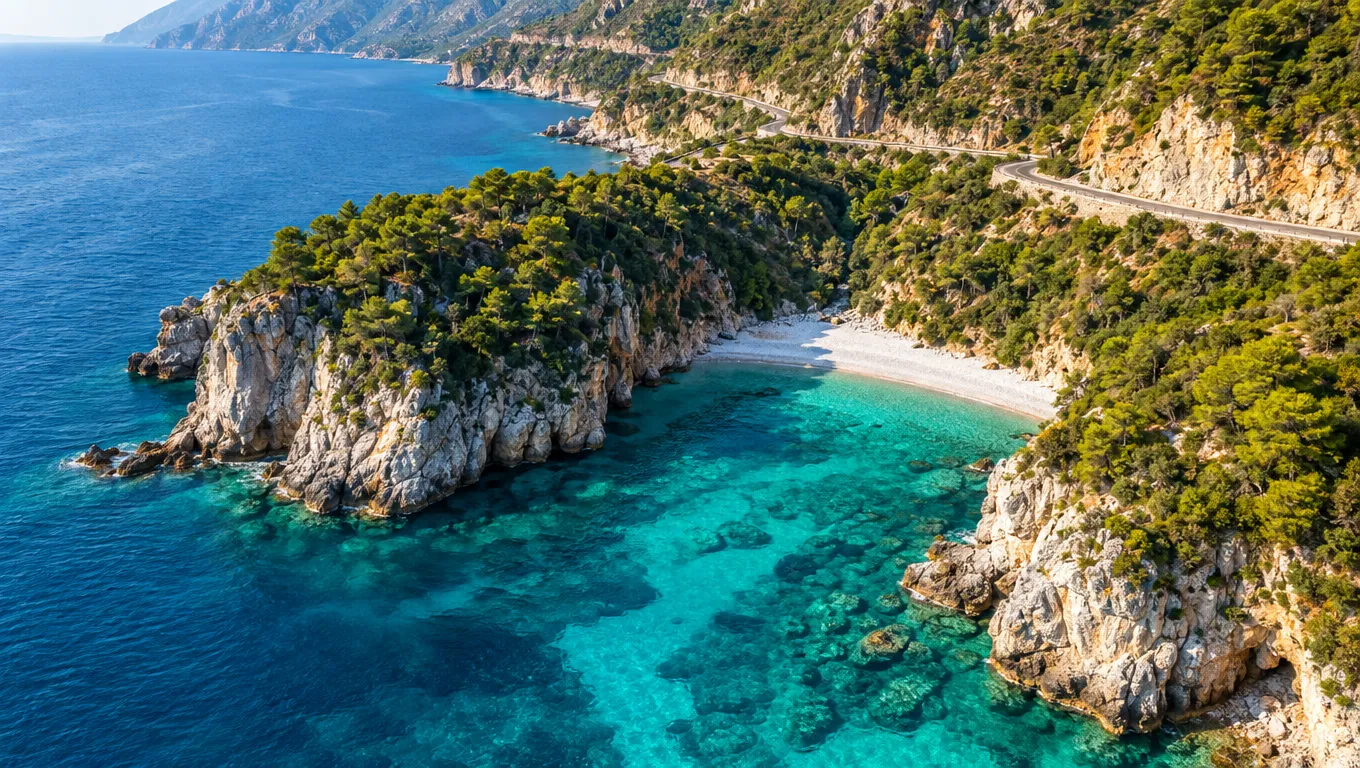
The Albanian Riviera runs 120 kilometres along the Ionian Sea, from the pine forests of the Llogara Pass to the island-dotted waters of Ksamil near the Greek border. Along that stretch are more than 20 swimmable beaches — wild canyon coves, seven-kilometre expanses of white pebble, party bays with thumping beach clubs, and sandy shorelines with turquoise water that draws comparisons to the Caribbean.
Not all of them are worth your time. Some are overcrowded in summer to the point of discomfort. Some require a difficult hike or a boat. Some look stunning in photos but disappoint in person. This guide ranks the best beaches on the Albanian Riviera based on water quality, scenery, crowd levels, accessibility, and overall experience — with honest assessments of what each beach does well and where it falls short.
For the full destination overview, see our Albania travel guide. For daily costs and budgeting, see Albanian Riviera on a Budget: Daily Costs 2026. For transport from Tirana, see How to Get from Tirana to the Albanian Riviera.
The Pebble Reality
Before the rankings: most Albanian Riviera beaches are pebble, not sand. The pebbles are typically fine, smooth, and white — beautiful against the turquoise water — but they are not the powdery sand of the Greek islands. Ksamil is the main exception with sandy stretches. Drymades has a rare mixed section. Pack lightweight water shoes. They are not optional. Once you adjust your expectations, you will appreciate what pebble beaches deliver: water clarity that regularly reaches 15 to 20 metres on calm days, far superior to what sandy-bottomed beaches produce.
| Beach Type | Beaches |
|---|---|
| Sandy | Ksamil, Himara town beach, parts of Lukova |
| Mixed (sand + pebble) | Drymades, Jalë |
| Fine white pebble | Palasë, Dhermi, Borsh, Bunec, Gjipe, Livadhi, Llamani, Potami, Qeparo |
| Rocky / cliff access | Filikuri, Aquarium Beach, Grama Bay |
The Rankings
1. Gjipe Beach — The Wild One
Gjipe is the most spectacular beach on the Albanian Riviera, and it earns the top spot because it delivers something the rest of the Mediterranean has largely lost: a genuinely wild coastal experience. The beach sits at the mouth of a dramatic canyon whose walls rise 70 metres on both sides. There is no electricity, no running water, and no built structures beyond a seasonal drinks vendor and some straw shade huts. The water is clear enough to see the bottom at 10 metres.
The catch is access. Gjipe can only be reached by a 20 to 30 minute hike down through the canyon from a parking area off the SH8, or by boat from Himara. The hike is manageable for most people — the path is uneven and exposed to sun, but not technical. The walk back up is the challenging part, especially in afternoon heat. Car access to the beach has been closed; you walk or take a boat.
Sunbeds: None. Bring your own towel and shade. Crowd level: Quiet before 10am; boat tours from Himara start arriving around 11. September is near-empty. Best for: Adventure seekers, snorkellers, photographers, anyone who wants to earn their beach. Skip if: You have mobility issues or want facilities.
💡 Pro Tip
Arrive before 9am to have the canyon cove to yourself. Bring at least 1.5 litres of water per person, sturdy shoes for the hike, and snorkelling gear — the rocky canyon walls harbour the best marine life on the Riviera.
2. Dhermi Beach — The Showpiece
Dhermi is the beach most often cited as the finest on the Albanian Riviera, and the claim has merit. A kilometre of near-white pebbles meets water so clear it looks digitally enhanced, backed by a hilltop village of centuries-old stone houses, cobblestone alleys, and blue-domed Orthodox churches perched 200 metres above the shore. The combination of beach, village, and mountain creates the most complete visual package on the coast.
Dhermi is also where the Riviera's social scene lives. Beach clubs like Havana and Folie Marine keep music going through the afternoon and evening, and the Kala Festival draws electronic music fans from across Europe. This is a strength or a weakness depending on what you want from a beach day.
Sunbeds: €15–30 per set at beach clubs; free sections exist but are narrow. Crowd level: Very busy July–August, especially around beach clubs. Significantly calmer in June and September. Best for: Couples, social travellers, beach club culture, photography. Skip if: You want solitude or a quiet day.
Walk ten minutes south of the beach clubs and the crowds thin dramatically. Walk uphill to the village itself — most visitors skip it — for 12th-century churches, tavernas with views stretching to Corfu, and one of the Riviera's most atmospheric old towns.
3. Palasë Beach — The Blue Flag Standard
Palasë holds Albania's only Blue Flag certification — the European standard for water quality, safety, and environmental management. It is a 1.5-kilometre crescent of white pebbles anchored by the Green Coast resort (MGallery hotel, shops, restaurants, water sports). The water clarity regularly reaches 15 to 20 metres on calm days.
The resort development gives Palasë the best infrastructure on the Riviera — lifeguards in summer, showers, toilets, organised water sports — without sacrificing the natural beauty. The southern end of the beach stays quiet even in August. Paragliders launching from the Llogara Pass land here throughout summer, adding a spectacle you will not see elsewhere on the coast.
Sunbeds: €15–25 per set in resort sections; quieter southern section is less commercial. Crowd level: Moderate. Resort spreads visitors along the full 1.5 km. Best for: Families, first-time visitors, anyone wanting reliable facilities with quality water. Skip if: You want a raw, undeveloped beach experience.
4. Drymades Beach — The Dual Character
A natural rock formation splits Drymades into two distinct beaches — one side white pebble, the other rare golden sand. This dual character makes it unique on the Riviera. The sandy section is a genuine rarity on the mostly-pebble coast, and the rocky edges harbour excellent marine life for snorkelling.
Drymades sits just two kilometres from Dhermi but feels like a different world — more relaxed, less commercial, with better sunsets. The fiery light behind the rock formations at golden hour creates some of the best photo opportunities on the coast.
Sunbeds: €10–20 per set; free sections available. Crowd level: Rarely overcrowded even in peak summer. Best for: Snorkellers, couples, sunset seekers, travellers who want Dhermi-quality water without Dhermi-level crowds. Skip if: You want nightlife or beach club energy.
5. Borsh Beach — Seven Kilometres of Solitude
At seven kilometres, Borsh is the longest unbroken beach in Albania — and one of the least developed. Walk 20 minutes in either direction from the access points and you may not see another person, even in August. The mountain backdrop is dramatic: olive groves, citrus orchards, and the ruins of the Castle of Sopoti visible on the hillside. Borsh is what the entire Albanian Riviera looked like 20 years ago.
The trade-off is fewer facilities. Restaurants and sunbed rentals cluster near the access points. The vast majority of the seven kilometres is empty shoreline with no shade, no food, and no company. That is either the appeal or the problem, depending on your style.
Sunbeds: €5–15 per set near access points; most of the beach is completely free. Crowd level: The lowest of any major Riviera beach. Best for: Solitude seekers, long walkers, campers, budget travellers. Skip if: You want restaurants and nightlife within walking distance.
6. Himara Town Beach — The Sandy Exception
One of the few genuinely sandy beaches on the Albanian Riviera — long stretches of soft white sand that would look at home on a Greek island. Himara is the only real town on the Riviera, which means ATMs, pharmacies, supermarkets, and a waterfront promenade alongside the beach.
This is the most practical beach on the coast. If you do not have a car, Himara is the best base — water taxis reach most nearby beaches, and minibuses run to Vlora and Saranda. The 6th-century castle above the town offers some of the best views on the coast, and the old town's stone alleys are worth an evening stroll.
Sunbeds: €10–20 per set; free sections available. Crowd level: Moderate — distributed along the full promenade. Best for: Families, carless travellers, anyone wanting a real town with a real beach. Skip if: You want wild scenery or crystal-clear pebble-beach water (sand reduces clarity slightly).
7. Livadhi Beach — The Active Beach
At 1.2 kilometres, Livadhi is the largest beach in the Himara area. The northern section, called Gonia, features marble stones and striking rock formations. Water sports are well developed: kayaks, paddle boats, jet skis, and beach volleyball courts. The surrounding olive trees provide natural shade in spots — a genuine luxury on the Riviera where parasol rental adds up fast.
Livadhi is less hyped than Dhermi but equally beautiful, with better infrastructure for anyone who wants to do more than lie on a towel.
Sunbeds: €10–20 per set; olive-shaded free areas available. Crowd level: Moderate. The 1.2 km length prevents overcrowding. Best for: Active beachgoers, families, water sports, long beach walks. Skip if: You want remoteness or party vibes.
8. Ksamil — The Famous One
The most famous beach destination on the Albanian Riviera. Three offshore islands accessible by swimming or short boat ride, some of Albania's only sandy beaches, and turquoise water that draws inevitable comparisons to the Maldives. Ksamil is gorgeous.
The honest assessment: Ksamil in July and August is extremely crowded. Sunbeds are packed shoulder to shoulder, boat traffic churns the water, music plays all day, and the "hidden gem" label that travel blogs still apply is years out of date. Sunbed sets at the centre of Ksamil in peak season now cost €20 to €40, with premium cabanas pushing higher. The 2026 council-approved umbrella cap for the island beaches reached 4,000 lek (approximately €40).
Ksamil in June or September is a different experience entirely — spacious, affordable, and genuinely beautiful. The three islands are the real attraction; swim or take a small boat to escape the main beach.
Sunbeds: €10–20 (off-centre) to €20–40 (centre, peak). Crowd level: Extreme July–August; moderate shoulder season. Best for: First-time visitors (June/September), couples, sandy beach seekers, island swimming. Skip if: You are visiting in August and dislike crowds.
⚠️ Heads Up
Always ask sunbed prices before sitting down in Ksamil. Prices vary dramatically between beach sections and operators. Some premium setups cost €40 or more per day, and pricing is not always posted. Ask first, avoid surprises.
9. Jalë Beach — The Party Beach
Jalë has four distinct beach areas offering different vibes, from bar-front energy to quieter coves. This is the Riviera's nightlife beach — Albania's oldest campsite (Kampingu Jal), beach bars pumping music past midnight, and summer festivals. The bay's currents create some of the clearest water on the coast, and the sheltered position makes for excellent swimming.
The party atmosphere is the point in July and August and the drawback for everyone else. September delivers the same beautiful bay without the noise.
Sunbeds: €10–20 per set. Crowd level: High peak season; moderate off-peak. Best for: Backpackers, party crowd, festival goers, budget campers. Skip if: You want quiet evenings.
10. Porto Palermo — The Castle Beach
No other beach in the Mediterranean offers what Porto Palermo does: swimming in a sheltered bay directly beneath a pentagonal Ottoman fortress built by Ali Pasha in the early 19th century. The castle watches over Panormi Bay like a stone sentinel. During the communist era, this was a secret submarine base.
The bay is calm, protected from open-sea currents, and feels like swimming in a private harbour. Local fishermen sell fresh catches on the shore — some of the best and cheapest seafood on the coast.
Sunbeds: Minimal formal setup; bring your own towel. Crowd level: Low. Most visitors come for the castle and leave. Best for: History lovers, photographers, calm swimming, cheap seafood. Skip if: You want sandy beaches or facilities.
11. Potami Beach — The Freshwater Spring Beach
Potami — Greek for "river" — hides a secret beneath its pebbled surface. Underground freshwater springs flow year-round into the Ionian, creating pockets of crisp, cold water that contrast strikingly with the warm sea. One step warm, the next icy, the next warm again. It is a swimming experience unique to this stretch of coast.
Sunbeds: €10–15 per set. Crowd level: Low to moderate. Best for: Curious swimmers, anyone wanting a unique natural experience. Skip if: You dislike cold-water surprises.
12. Llamani Beach — The Snorkelling Cove
A small, intimate cove just 200 metres long, framed between rocky headlands south of Himara. Like Potami, Llamani has cold freshwater springs that create temperature variations. The rocky sides make it one of the better snorkelling spots near Himara, and the greenery-fringed backdrop photographs beautifully.
Sunbeds: €10–15 per set. Crowd level: Fills fast in peak season due to the 200-metre length — arrive before 9am. Best for: Snorkellers, couples, anyone wanting an intimate beach. Skip if: You need space to spread out.
13. Mirror Beach (Pasqyra) — The Calm Morning Beach
On windless mornings, the sheltered bay becomes glass-smooth, reflecting surrounding mountains with surreal clarity. "Pasqyra" means mirror in Albanian. The effect is one of the most photogenic phenomena on the coast, and it lasts until the afternoon wind picks up.
Mirror Beach sits between Saranda and Ksamil — less crowded than Ksamil while offering similar water quality. The access road can be rough; drive carefully in a small rental car.
Sunbeds: €10–15 per set. Crowd level: Moderate — busier since becoming an Instagram destination, but manageable. Best for: Photographers, calm swimmers, a half-day beach stop between Saranda and Ksamil. Skip if: You arrive in the afternoon when wind breaks the mirror effect.
14. Qeparo Beach — The Painted Bunkers
Qeparo's distinction is unique in Europe: a line of Cold War-era concrete bunkers — remnants of Enver Hoxha's regime, which built an estimated 173,000 across Albania — repainted in vivid pinks, yellows, and blues. They are striking against the azure water, simultaneously absurd and beautiful.
The old village uphill is a time capsule — stone houses, narrow alleys, and the ruins of Ali Pasha's castle. On clear days, Corfu is visible across the water.
Sunbeds: €8–15 per set. Crowd level: Low. The party crowd stays at Dhermi and Jalë. Best for: History buffs, families, photography, quiet beach days. Skip if: You want facilities or nightlife.
15. Bunec Beach — The Sunset Beach
A small river descends from the mountains and splits this beach in two where it enters the Ionian, creating a freshwater-meets-saltwater environment. Bunec's west-facing position and mountain backdrop catch golden hour perfectly — it has the best sunset on the Riviera outside of the Llogara Pass viewpoint.
Sunbeds: Limited; bring your own towel. Crowd level: Low. Best for: Sunset chasers, campers, snorkellers, nature lovers. Skip if: You want restaurants or infrastructure.
16. Lukova Beach — The Hidden Sandy One
A pleasant surprise on the mostly-pebble Riviera: Lukova has actual sand. Multiple small coves plus the larger Shpella beach create a varied coastline. The seafood restaurants here are destinations in themselves — some of the best food on the Riviera at non-inflated prices. The deliberate absence of water sports keeps the atmosphere peaceful.
Sunbeds: €8–15 per set. Crowd level: Low to moderate. Best for: Foodies, sand seekers, a quieter alternative to Ksamil. Skip if: You want water sports or nightlife.
Hidden Gems
These beaches require a boat or significant effort to reach. They reward the effort with near-total seclusion.
Filikuri Beach — Only 100 metres long, accessible by boat from Himara (water taxi or kayak rental, €10–20) or a steep 20 to 30 minute hike with rope-assisted sections. No facilities whatsoever. True seclusion and exceptional snorkelling.
Aquarium Beach — Between Jalë and Livadhi, named for the extraordinary marine life visible in its clear water. Accessible by an unpaved road or by boat. A small cove with some of the best snorkelling on the entire Riviera.
Grama Bay — On the Karaburun Peninsula, accessible only by boat from Vlora. Over 1,500 rock carvings spanning ancient Greece through World War II, a marine park home to rare Mediterranean monk seals, and white sand in a cliff amphitheatre. The ultimate hidden beach, but requires a full-day boat trip.
Pulebardha and Monastiri — Two quiet beaches on the Saranda–Ksamil road, overlooked by nearly everyone rushing to Ksamil. Free access, minimal crowds, and water quality matching their famous neighbour.
Best Beaches by Category
Best for Snorkelling
The secret is rocky edges and limited boat traffic — conditions that preserve both marine life and visibility. The top five: Gjipe Beach (canyon walls, untouched marine environment), Aquarium Beach (named for a reason), Jalë Beach (bay currents create exceptional clarity), Drymades Beach (rock formation harbours fish on both sides), and Llamani Beach (rocky headlands, sheltered cove).
Best for Families
Palasë (Blue Flag, lifeguards, full facilities), Himara town beach (sandy, real town services), Livadhi (wide, water sports, olive tree shade), Orikum near Vlora (calm, affordable, easy access), and Qeparo (quiet, family atmosphere, shallow entry).
Best for Sunset
Drymades (rock formation silhouettes, the most photogenic sunset), Bunec (west-facing, mountain-backed), Porto Palermo (Ali Pasha Castle in silhouette), Palasë (wide beach, paragliders in golden light), and — not a beach — the Llogara Pass viewpoint at 1,027 metres overlooking the entire coast.
Best for Budget Travellers
Borsh (sunbeds from €5, kilometres of free beach), Himara area (Sfageio and Filikuri are free), Qeparo (low prices, overlooked), and Bunec (camping tolerated, minimal costs).
Quick Comparison Table
| Rank | Beach | Type | Sunbed Cost | Crowd Level | Best For |
|---|---|---|---|---|---|
| 1 | Gjipe | Pebble | Free (none) | Low | Adventure, snorkelling |
| 2 | Dhermi | Pebble | €15–30 | High (peak) | Social, photography |
| 3 | Palasë | Pebble | €15–25 | Moderate | Families, facilities |
| 4 | Drymades | Mixed | €10–20 | Low–moderate | Snorkelling, sunsets |
| 5 | Borsh | Pebble | €5–15 | Very low | Solitude, walking |
| 6 | Himara town | Sandy | €10–20 | Moderate | Carless travellers |
| 7 | Livadhi | Pebble | €10–20 | Moderate | Water sports, families |
| 8 | Ksamil | Sandy | €10–40 | Extreme (peak) | Islands, sandy beach |
| 9 | Jalë | Mixed | €10–20 | High (peak) | Nightlife, festivals |
| 10 | Porto Palermo | Gravel | Minimal | Low | History, calm swimming |
| 11 | Potami | Pebble | €10–15 | Low | Unique freshwater springs |
| 12 | Llamani | Pebble | €10–15 | Moderate | Snorkelling, intimacy |
| 13 | Mirror (Pasqyra) | Pebble | €10–15 | Moderate | Photography, calm water |
| 14 | Qeparo | Pebble | €8–15 | Low | History, families |
| 15 | Bunec | Pebble | Minimal | Low | Sunset, camping |
| 16 | Lukova | Sandy | €8–15 | Low | Food, quiet sand |
How to Beach-Hop the Riviera
A rental car is the best way to experience the Albanian Riviera's beaches. The SH8 coastal road connects all the towns, and most beaches are a short drive or walk from the highway. Without a car, Saranda and Ksamil are manageable by bus and taxi, and Himara works as a base for water taxis to nearby beaches.
The practical approach for a week: base yourself in two locations — Himara for the central Riviera (Gjipe, Dhermi, Drymades, Livadhi, Jalë) and Saranda or Ksamil for the south (Ksamil islands, Mirror Beach, Butrint). Rent a car for three to four days to cover the spread; use local transport for the rest.
For the complete transport breakdown, see How to Get from Tirana to the Albanian Riviera.
When to Go
September is the best month for beaches on the Albanian Riviera. Sea temperature holds at 24 to 25°C, crowds thin dramatically, sunbed prices drop 20 to 30%, and the light is softer for photography. June is the second-best option — warm enough for comfortable swimming (22 to 24°C) with pre-peak pricing. July and August are warmest (25 to 27°C) but most crowded and most expensive. May (19 to 21°C) and October (20 to 22°C) are borderline — swimmable for most, with near-empty beaches.
Beach Safety
Sea urchins are present on rocky sections. Water shoes handle this — wear them when entering over rocks at Llamani, Drymades, Gjipe, and Filikuri.
Jellyfish appear occasionally in August and September. Moon jellyfish (mild sting) are the most common species. Treat with vinegar or seawater, not freshwater.
No lifeguards at most beaches. Palasë (Blue Flag) is the exception. The Ionian is generally calm, but open beaches like Borsh and Palasë can have moderate surf on windy days.
UV index reaches 8 to 10+ in summer. White pebbles intensify reflection. Sunscreen is essential, and buying it at a Saranda or Himara supermarket (€4 to €8) saves significantly over beach kiosk prices (€12 to €20).
Medical care: Nearest well-equipped hospitals are in Saranda and Vlora. Village clinics exist but are basic. Travel insurance is strongly recommended given the remote beach locations and road conditions.
Frequently Asked Questions
What is the best beach on the Albanian Riviera? Gjipe Beach for scenery and adventure. Dhermi for the complete coastal experience. Ksamil for sandy beaches and island swimming. The answer depends on what you value — this coast rewards exploring multiple beaches rather than committing to one.
Are Albanian Riviera beaches sandy or pebble? Most are pebble. Ksamil, Himara town, and Lukova are the main sandy exceptions. Drymades has a mixed section. The pebbles produce water clarity that sandy beaches cannot match — once you try it, the trade-off makes sense.
When is the best time to visit? September. Sea temperatures hold at 24 to 25°C, crowds vanish, and prices drop 20 to 35% across the board. June is the runner-up.
Do I need a car to visit these beaches? For Saranda and Ksamil: no. Buses and taxis work fine. For the full Riviera — Gjipe, Borsh, Dhermi, Jalë, Porto Palermo — a rental car is highly recommended. Public transport exists but is too infrequent and inflexible for proper beach-hopping.
Is Ksamil worth visiting? Yes, but timing matters enormously. Ksamil in June or September is beautiful, affordable, and spacious. Ksamil in August is packed, expensive, and stressful. The beach itself has not changed — the crowd level has.
How much do sunbeds cost? Free to €40 depending on beach and season. Budget beaches: €5 to €10 (Borsh, Qeparo). Mid-range: €10 to €20 (Drymades, Livadhi, Himara). Premium: €20 to €40 (Dhermi beach clubs, Ksamil centre). Every beach has a mandated free section where you can lay your own towel.
Which beach has the best snorkelling? Gjipe Beach and Aquarium Beach share the top spot. Gjipe's canyon walls create an untouched marine environment. Aquarium Beach lives up to its name with exceptional underwater visibility. Bring your own gear — rental is inconsistent outside Ksamil and Himara.
The Albanian Riviera is not one beach — it is 16 ranked beaches and a half-dozen hidden gems, each with a distinct character. The canyon drama of Gjipe. The social energy of Dhermi. The seven-kilometre solitude of Borsh. The sandy islands of Ksamil. The painted-bunker absurdity of Qeparo. This is a coast that rewards curiosity and punishes peak-season tunnel vision. Visit in September, base yourself in two towns, rent a car for part of the trip, and you will find a Mediterranean coastline that still feels like a discovery.
For daily costs and budget planning, see Albanian Riviera on a Budget: Daily Costs 2026. For the complete destination overview, read our Albania travel guide.